
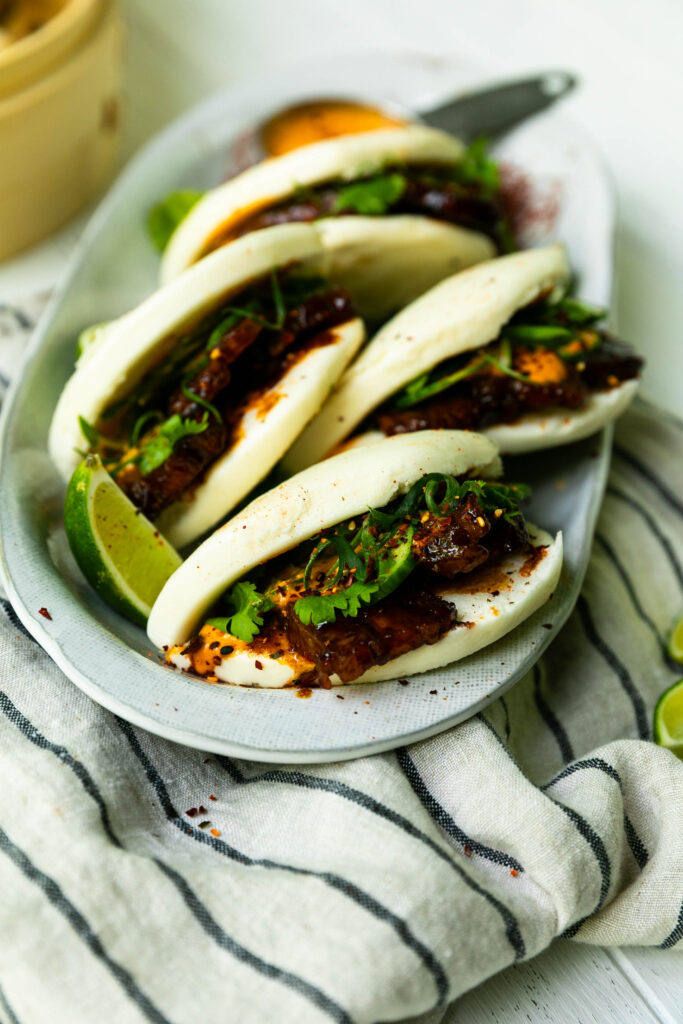
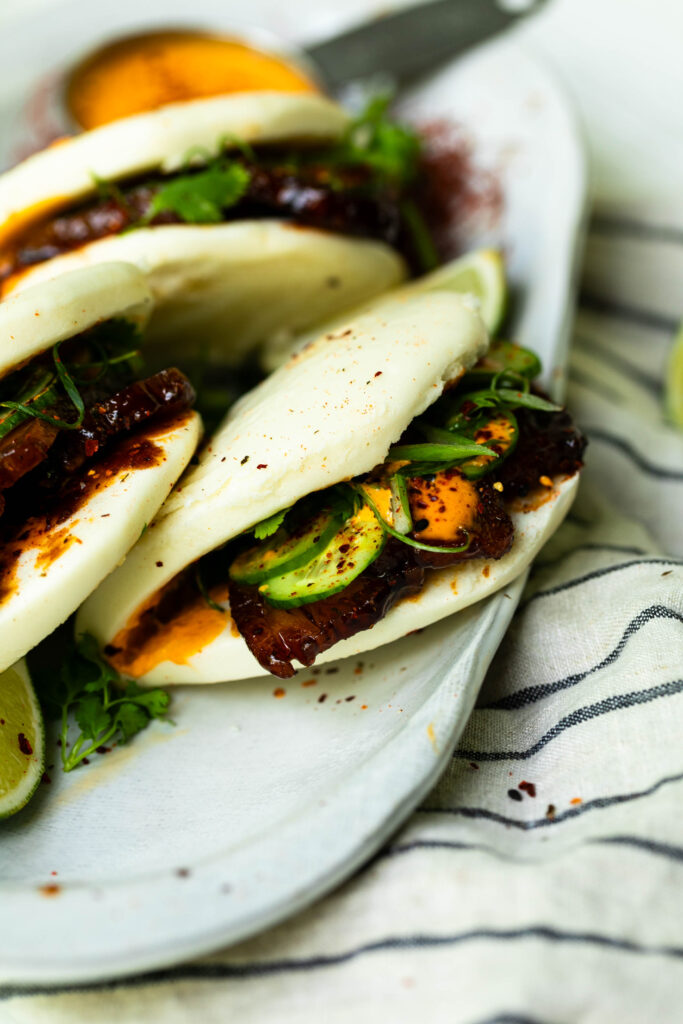
Imagine biting into a soft, pillowy steam bun filled with succulent, tender pork belly that’s been slow-roasted to perfection. The pork belly is infused with a sweet and savory glaze, featuring the rich umami of soy sauce, the subtle sweetness of mirin and brown sugar, and a hint of heat from gochujang. Each bite is an explosion of flavors, balanced perfectly with the fresh crunch of cucumber, the bright, herbal notes of cilantro, and the tangy kick of creamy kimchi mayo. The shichimi togarashi adds a final touch of spice and complexity, making this dish unforgettable—perfect for impressing guests or treating yourself to something truly special.
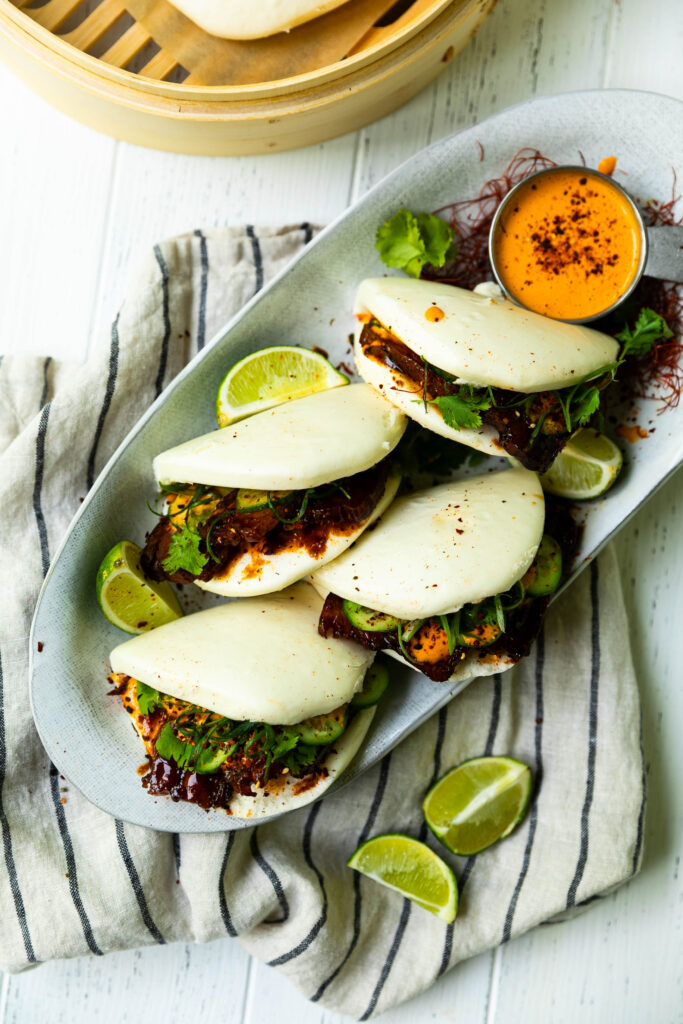
Let’s get one thing straight: this isn’t your usual crispy pork belly. We’re talking about tender, melt-in-your-mouth, flavor-packed pork belly that’s perfect for steam buns. Inspired by the incredible buns at Hip-Stir in Marion, IA, this is my best approximation of their dish. Aside from just going off my taste memory, I referenced the menu and studied all the pictures I could find online to get as close as possible. From their menu: 3 steam buns | pork belly | cucumber | herbs | red onion | creamy kimchi | togarashi
My recipe is a fusion of Korean, Japanese, and Chinese flavors—some may be a little more difficult to get, but if you have a well-stocked Asian market or *ahem* Amazon, you can get all the ingredients. Fair warning, though—this is a weekend project. We’re talking about prepping two days in advance and slow-roasting for hours. But trust me, it’s worth every minute.
A Brief History of Steam Buns
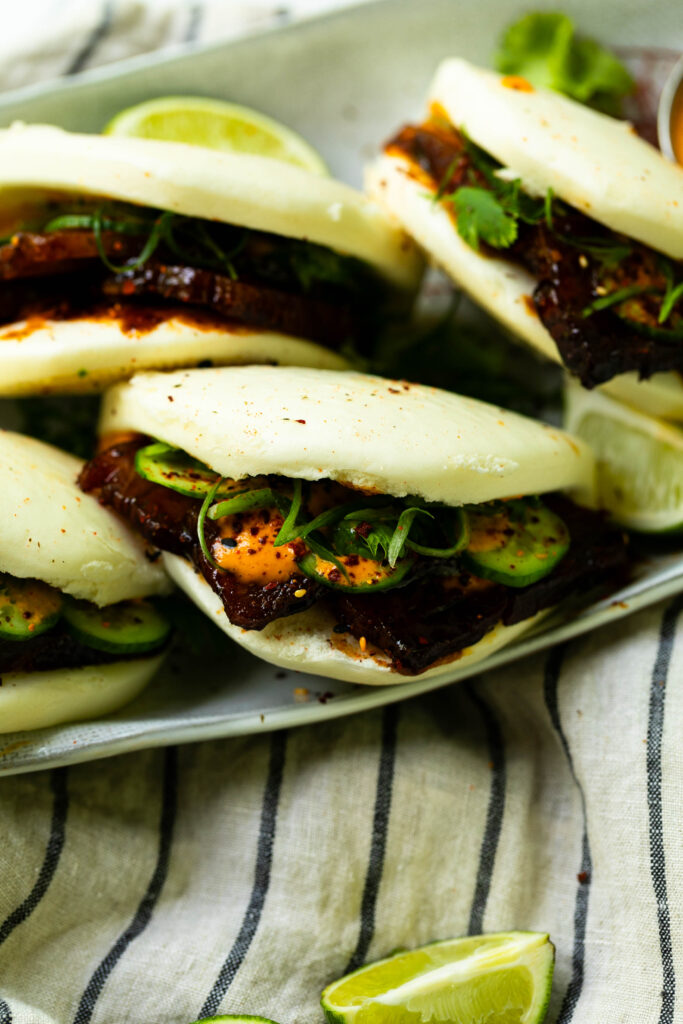
Before we dive into the recipe, let’s take a quick trip back in time. Steam buns, or baozi, have been a staple in Chinese cuisine for centuries. Traditionally filled with meats and vegetables, these fluffy, cloud-like buns have crossed cultural boundaries and evolved into various delicious forms. Our version today is a nod to this rich history but with a modern twist that pulls in flavors from Korea and Japan.
The Traditional Steam Bun
Classic steam buns are often filled with savory pork, sweet and tangy sauces, and fresh vegetables. The beauty of the steam bun lies in its simplicity and versatility. Whether you’re biting into a char siu bao (BBQ pork bun) or a vegetarian version packed with mushrooms and greens, the soft, pillowy dough and flavorful filling create perfect harmony.
The Recipe
Ingredients
4-pound pork belly, though you can really do this with just about any quantity/size of pork belly you want
Glaze:
- Light soy sauce
- Japanese mirin
- Light or dark brown sugar
- Garlic cloves
- Fresh ginger
- Gochujang
- Water
- Toasted sesame oil
Kimchi Mayo:
- Kewpie mayo
- Kimchi
- Gochujang
- Toasted sesame oil
- Sriracha
To Serve:
- Lotus steam buns
- Thinly sliced cucumber
- Picked cilantro leaves
- Thinly sliced green onions
- Shichimi togarashi*
- Lime wedges
*Shichimi togarashi, also known as Japanese seven-spice blend, is a key part of serving these steam buns in my opinion; it adds tons of flavor and a bit of crunch. It typically contains the following ingredients:
- Chili Pepper: The primary ingredient, providing heat.
- Orange or Yuzu Peel: Adds a citrusy aroma and flavor.
- Sesame Seeds: Both black and white sesame seeds are often used for their nutty taste.
- Japanese Pepper (Sansho): Gives a slight numbing and peppery flavor.
- Seaweed (Nori): Adds umami and a subtle oceanic flavor.
- Ginger: For a warm, spicy note.
- Poppy Seeds: Adds a bit of crunch and visual appeal.
These ingredients are blended together to create a complex, multifaceted seasoning that’s spicy, citrusy, and aromatic, with a hint of earthiness and umami. It’s commonly used to sprinkle over noodles, rice dishes, and, of course, our delicious steam buns.
Equipment
- Plastic cutting board
- Chef’s knife
- Large sheet pan
- Small blender or food processor (small personal blender works best if you have one)
- Saucier or saucepan
- Slicing knife (not necessary but it’s nice to have to easily slice the meat)
- 12″ nonstick skillet
- Kitchen tweezer set or tongs (tweezers are fun to have and are easier/gentler on the pork when reheating but not necessary)
- 10-inch steamer baskets (not necessary to heat lotus buns, but again, nice to have)
Instructions
Step 1: Prep the Pork Belly (Start Two Days in Advance of Serving)
– Night Before Cooking: Cut pork belly into 5 x 3-inch pieces. Prick fat layer, season with salt, wrap, and refrigerate. This allows the salt to really penetrate the meat, flavoring it throughout. Since we’re not going for crispy, wrapping in plastic wrap will keep the exterior of the pork from drying out overnight in the fridge.
– Cooking Day: Roast at 275°F for 4–5 hours until fork-tender. Cool and refrigerate overnight. This is a key step in my opinion; thinly slicing hot/warm pork belly might be impossible.
Step 2: Make Kimchi Mayo
– Since this really benefits from a little resting time to bring the flavors together, make this the day before serving when the pork is cooking. Blend all ingredients until smooth and refrigerate.
Step 3: Prepare the Glaze
– Boil glaze ingredients until syrupy. Cool.
Step 4: Assemble the Steam Buns
– Slice chilled pork, coat in glaze, and gently heat in a skillet.
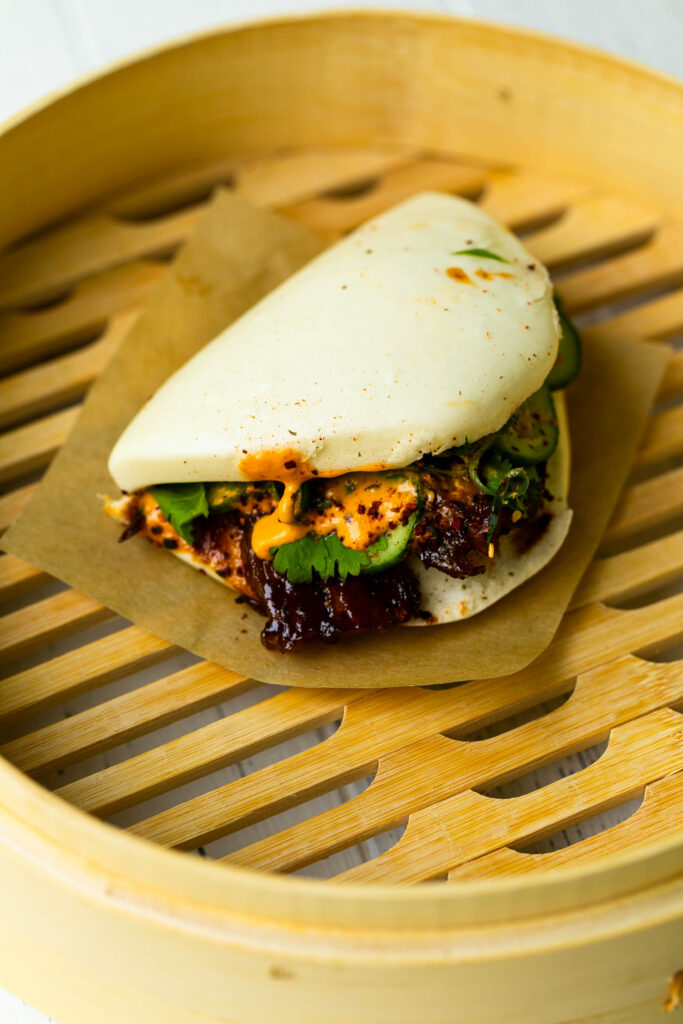
– Stuff pork into buns with cucumber, cilantro, green onions, kimchi mayo, and shichimi togarashi. Serve with lime wedges.
Tips and Tricks
– Seasoning: Properly salt the pork belly overnight to enhance flavor.
– Slow Cooking: Ensure the pork is fork-tender; patience is key. If it’s not tender, keep cooking.
– Chill Pork: Refrigerating the pork overnight makes it easier to slice.
– Customize Heat: Adjust the gochujang and Sriracha to your preferred spice level.
– Glaze Consistency: Reduce the glaze to a maple syrup thickness for best results.
– This is great for serving a crowd, but if you just really need some tender pork belly steam buns for yourself, this freezes beautifully, glazed and all.
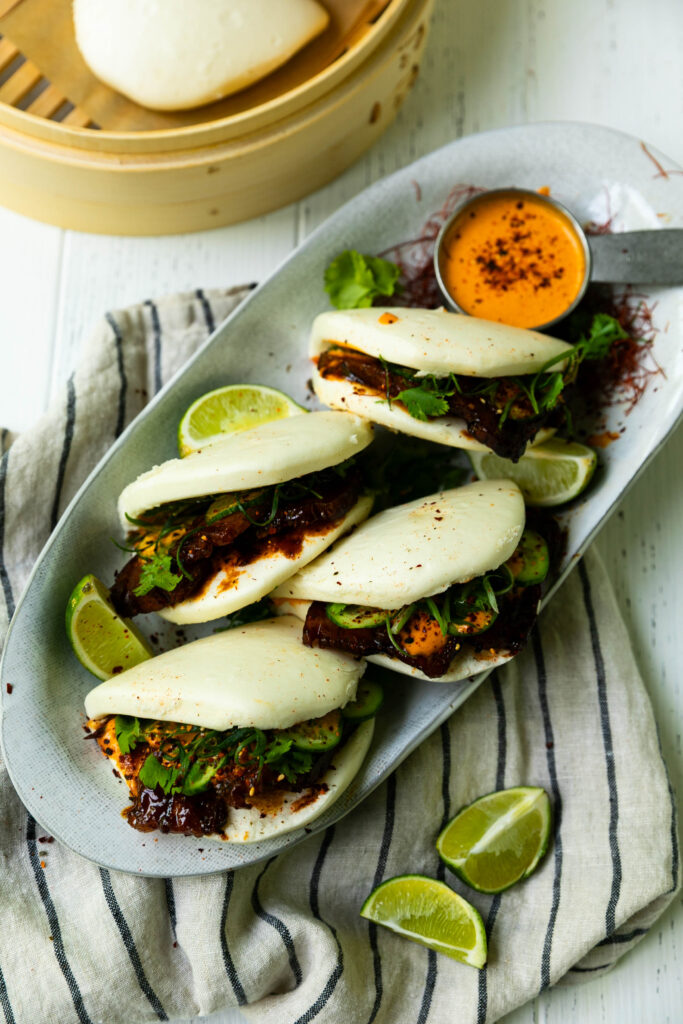
Congratulations, you did it! You’ve just made Glazed Pork Belly Steam Buns with Kimchi Mayo. This was a journey. This isn’t a dish you whip up on a whim; it’s a labor of love that pays off in every bite. It also makes a sh*t-ton of pork because if I’m spending all this time on a meal, I want some leftovers, ya feel me? Whether you’re impressing friends or treating yourself, these buns are a testament to the delicious possibilities that arise when culinary traditions meet creativity and restaurant inspiration. Happy cooking!
[tasty-recipe id=”45059″]
Leave a Reply