
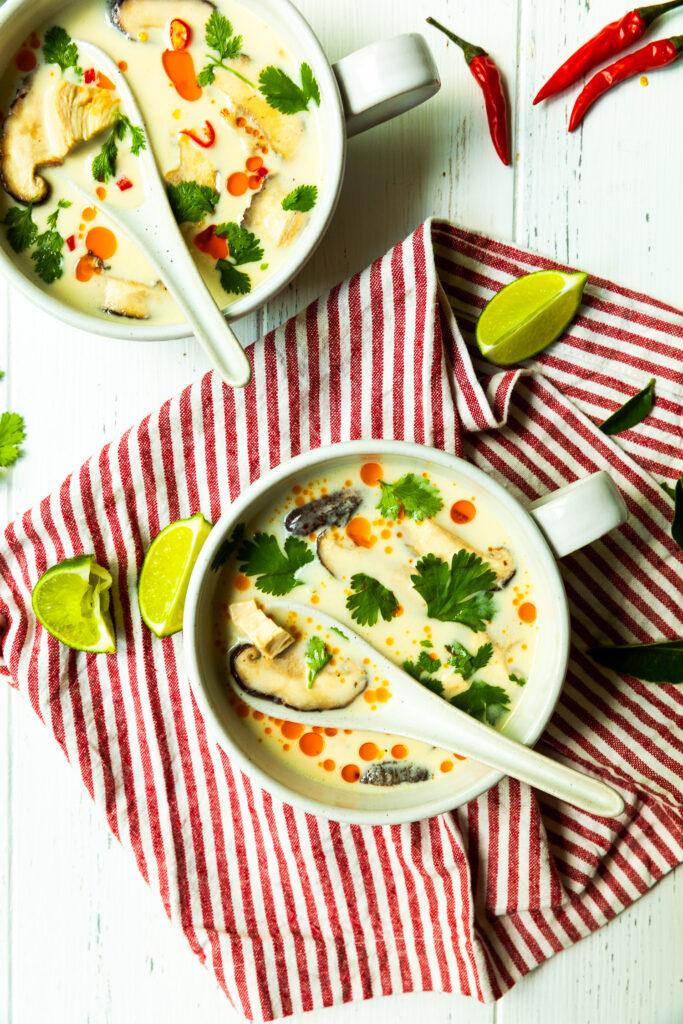
Tom Kha Gai is the perfect antidote to dreary, bone-chilling weather—the perfect winter soup with a tropical twist. It’s cold, dark, and the kind of miserable outside that makes you question why you ever chose to live somewhere with actual seasons. But just because the world outside looks like a frozen wasteland doesn’t mean your dinner has to feel that way. Enter a soup that’s as warming and cozy as your favorite oversized sweater, but with a tropical brightness that reminds you sunshine still exists somewhere.
This isn’t your average winter soup. Sure, it’s warm and comforting, but instead of being heavy and monotonous, it’s light, fragrant, and bursting with flavors that make you feel like you should be eating it on a beach instead of huddled under a blanket. Rich coconut milk, zippy lime, and the unmistakable punch of lemongrass and galangal make each spoonful taste like a much-needed escape from winter’s icy grip. Let me also say that this may be the only soup I want to eat year-round, even in the height of Iowa summers. If you’ve never experienced an Iowa summer, let me paint a picture for you: Step outside, and it’s like walking into a wall of wet, sticky heat that makes you question your choice to live in Iowa. The air is somehow both thick and oppressive, like a weighted blanket made of humidity. Your clothes stick to you, your hair takes on a mind of its own, and the mosquitoes are basically government-sized drones at this point. And yet—yet—I would still eat this soup in that infernal heat because it’s that good.
The History and Cultural Significance of Tom Kha Gai
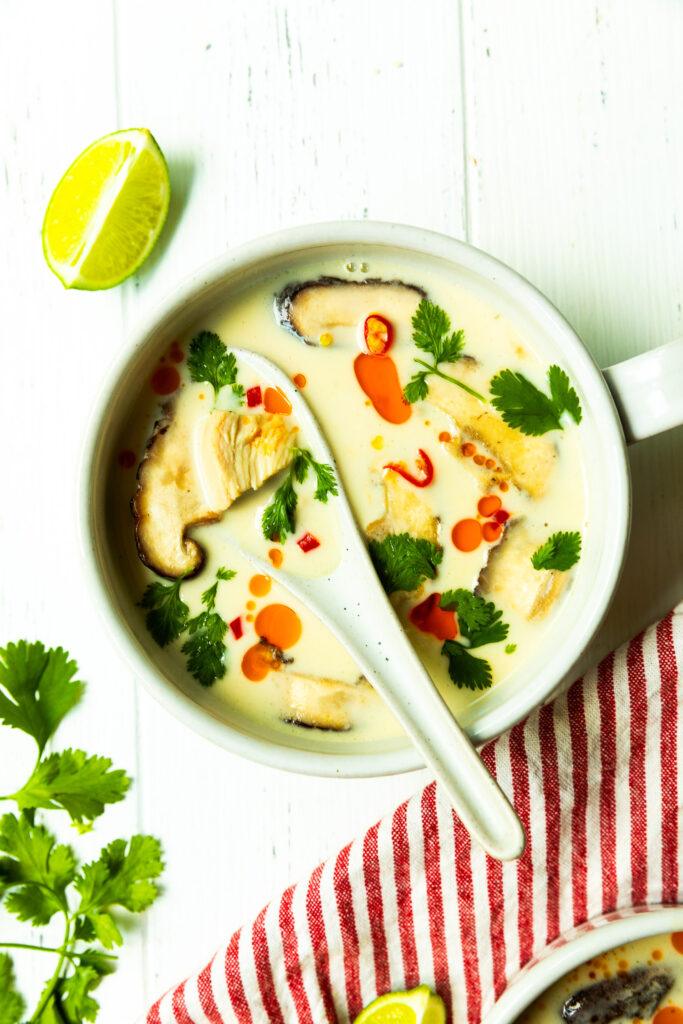
Tom Kha Gai is one of those dishes that, once you taste it, you wonder how you ever lived without it. It’s a cornerstone of Thai cuisine, balancing creamy, tangy, spicy, and umami flavors in a way that makes every bite more addictive than the last.
The name breaks down pretty simply: “Tom” means “boiled” (as in soup), “Kha” refers to galangal, the aromatic rhizome that gives this dish its signature zing, and “Gai” means chicken. While the dish has some similarities to Tom Yum, its fiery, clear-brothed cousin, Tom Kha Gai is the more comforting, mellow, and downright luxurious option—thanks to the generous use of coconut milk.
While variations exist (and I mean exist—there are versions with shrimp, tofu, or no protein at all), the essential elements remain unchanged: galangal, lemongrass, makrut lime leaves, coconut milk, and fish sauce. These ingredients are the heart and soul of Tom Kha Gai, and without them, you’re making… something else.
What Makes Tom Kha Gai So Special?
Imagine this: The rich, velvety coconut milk coats your tongue with a silky, slightly sweet creaminess. The galangal and lemongrass punch through with a citrusy, almost peppery brightness, keeping the soup from feeling too heavy. The makrut lime leaves add an unmistakable floral fragrance, while the fish sauce brings that deep, salty umami note that makes everything pop. And then, of course, there’s the heat from the Thai chilies—just enough to make your lips tingle without setting your whole face on fire (unless that’s what you’re into, in which case, go wild).
Ingredients Breakdown: Why Each One Matters
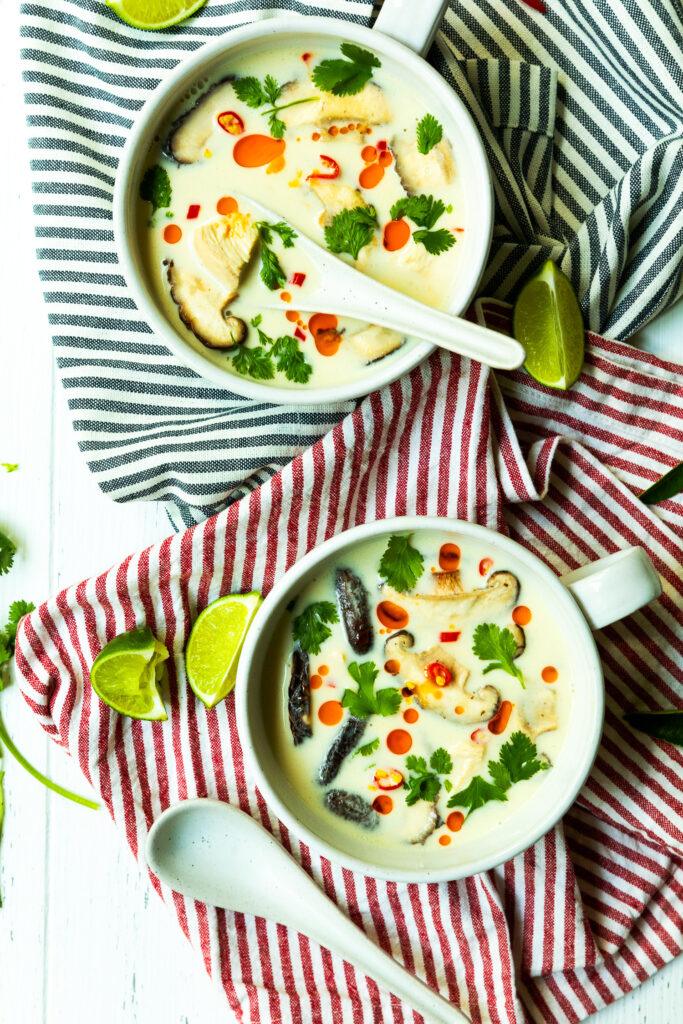
This soup is all about balance. Every ingredient plays a role, and skipping any of the aromatics means sacrificing depth of flavor. Here’s what you’re working with:
- Galangal – Not to be confused with ginger (seriously, don’t do it), galangal has a sharper, more citrusy and piney taste. It’s essential to the dish, so seek it out.
- Lemongrass – Provides a bright, lemony freshness that cuts through the richness of the coconut milk.
- Makrut Lime Leaves – Floral, citrusy, and slightly bitter, these are irreplaceable. Regular lime zest is not the same, and I will personally haunt you if you try it.
- Coconut Milk – Full-fat only, please. This is not the time for “lite” anything.
- Fish Sauce – Salty, funky, and essential for umami depth. If you think you don’t like fish sauce, I promise you just haven’t had it in the right context yet.
- Palm Sugar – Adds a subtle sweetness to balance the heat and acidity. Brown sugar works in a pinch, but palm sugar is superior.
- Thai Chilies – These little guys bring the heat. If you’re spice-averse, you can dial it back, but don’t leave them out entirely.
- Shiitake or Oyster Mushrooms – They soak up all that delicious broth and add a bit of chewiness to contrast the silky soup. Plus, I WILL NEVER TURN DOWN A MUSHROOM—ahem, the edible kind, not the psychedelic kind.
- Rotisserie Chicken – A weeknight shortcut that keeps things easy. You could absolutely poach your own chicken, but let’s not pretend we always have that kind of time.
- Lime Juice – The final touch that wakes everything up.
Equipment Needed
- Chef’s knife
- Plastic cutting board
- Liquid measuring cups
- Measuring cups and spoons
- 5.5-quart enamel Dutch oven or 4-quart saucepan
- Food scale
- Wooden spoon
- 12-inch stainless-steel tongs
Technique Tips & Tricks
- Bruise the aromatics – Smashing the galangal, lemongrass, and chilies helps release their essential oils, making the broth way more flavorful.
- Don’t boil the soup – Coconut milk has a habit of curdling if it gets too hot, so keep it at a gentle simmer.
- Strain out the inedibles – Lemongrass stalks, lime leaves, and galangal slices are there for flavor, not texture. Nobody wants to bite into a woody chunk of lemongrass.
- Adjust to taste – More fish sauce for saltiness, more palm sugar for sweetness, more lime juice for acidity. You’re the boss.
Serving Suggestions
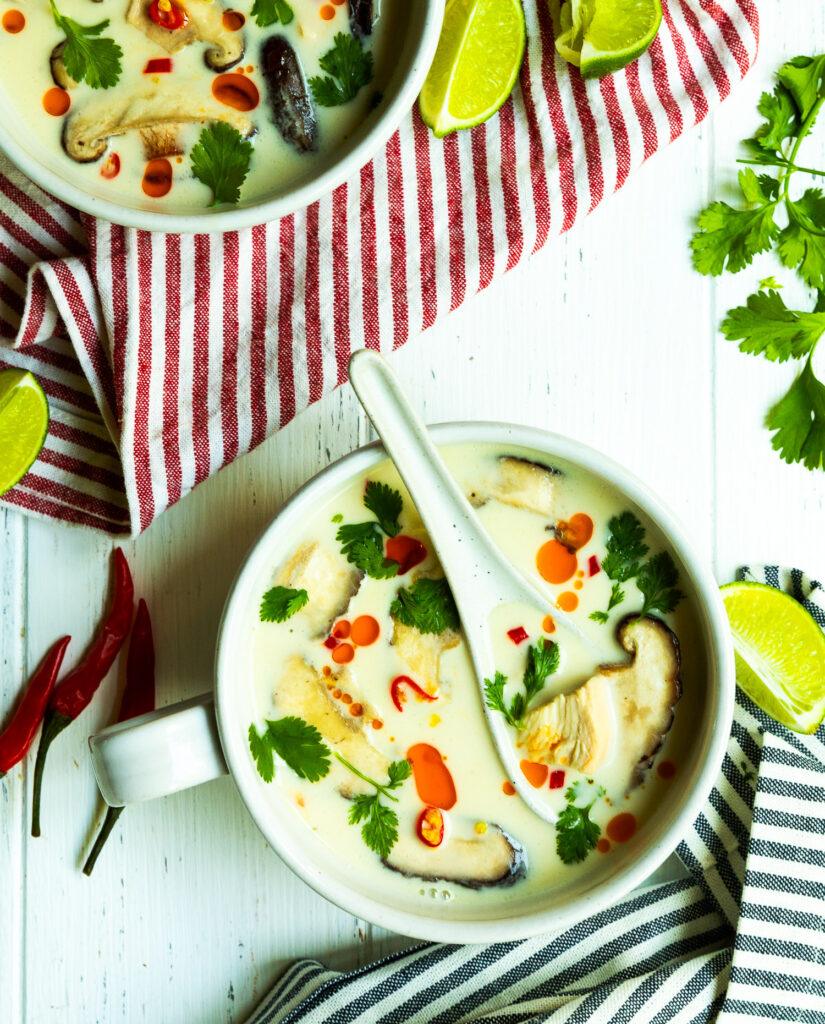
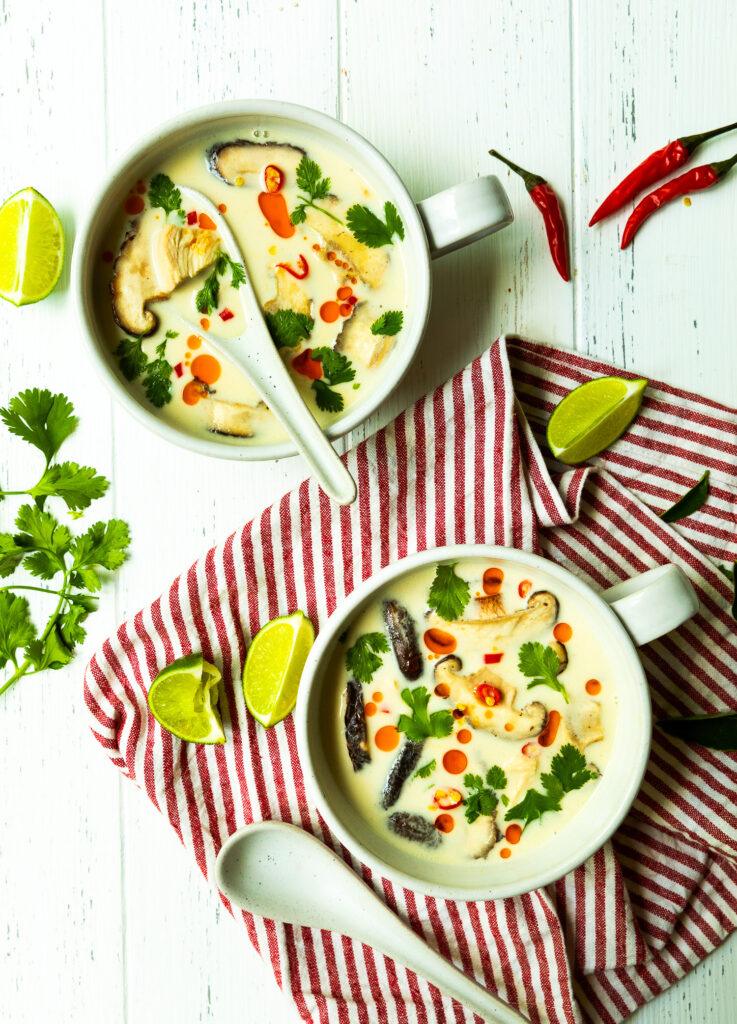
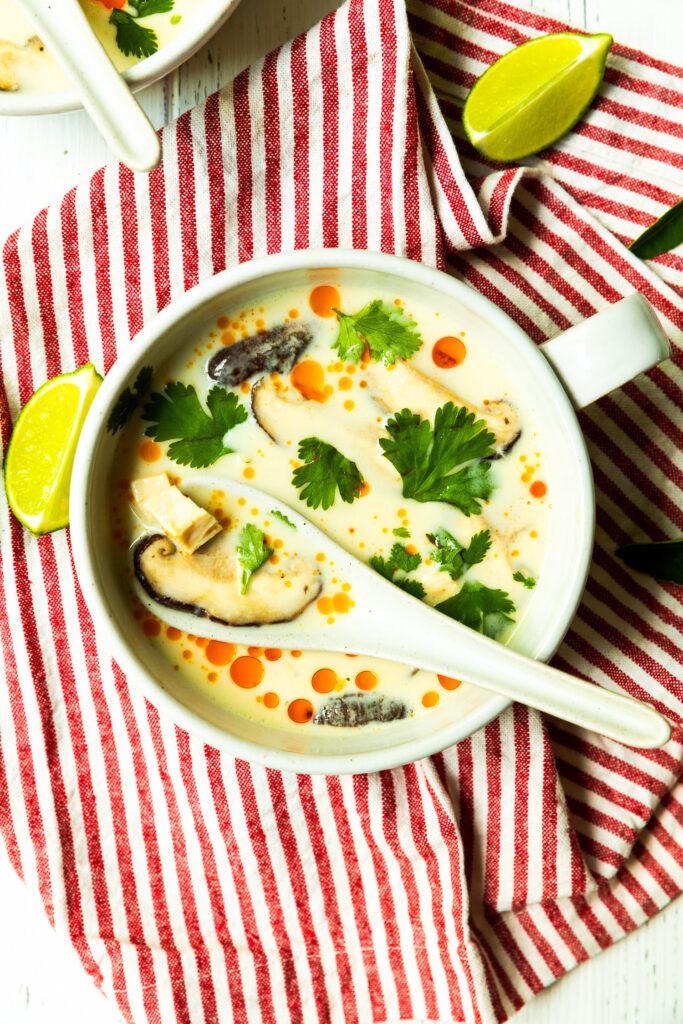
This soup is a meal on its own, but if you want to go all out, serve it alongside jasmine rice or a simple Thai cucumber salad. A drizzle of chili oil on top adds extra richness and heat, while a sprinkle of fresh cilantro keeps things fresh and vibrant.
Final Thoughts
Tom Kha Gai is a masterclass in balance—rich yet bright, creamy yet light, spicy yet soothing. If you’ve never made it at home, it’s time to change that. One spoonful in, and you’ll wonder why you ever settled for takeout versions that just don’t hit the same.
Happy cooking!
[tasty-recipe id=”48026″]
Leave a Reply