
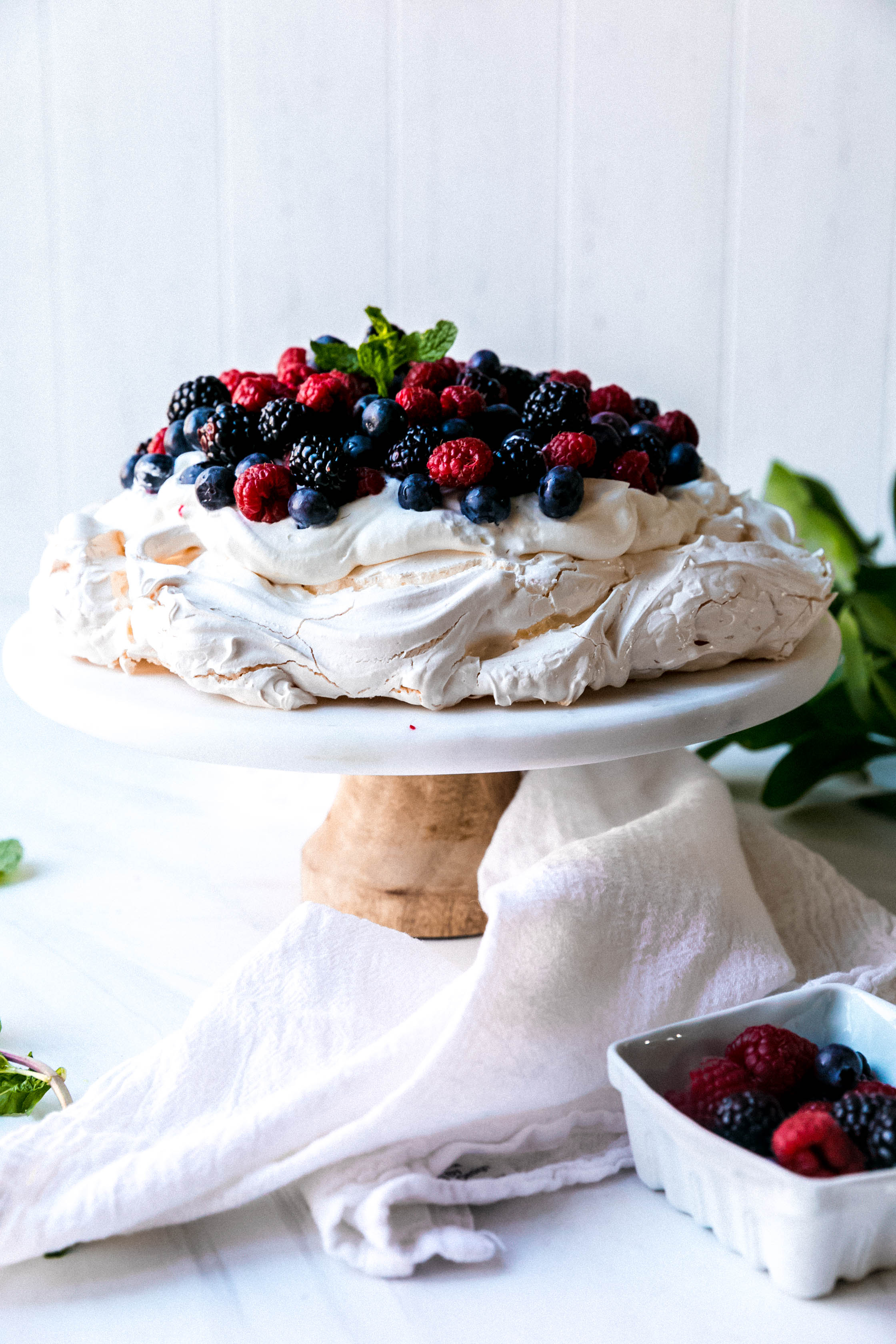
 This is a real showstopper, guys. She’s beautiful, and elegant, and delicate, and light as a cloud. A true study in textures, with a crisp, crunchy shell, soft, marshmallow-y center and chewy where the two textures meet.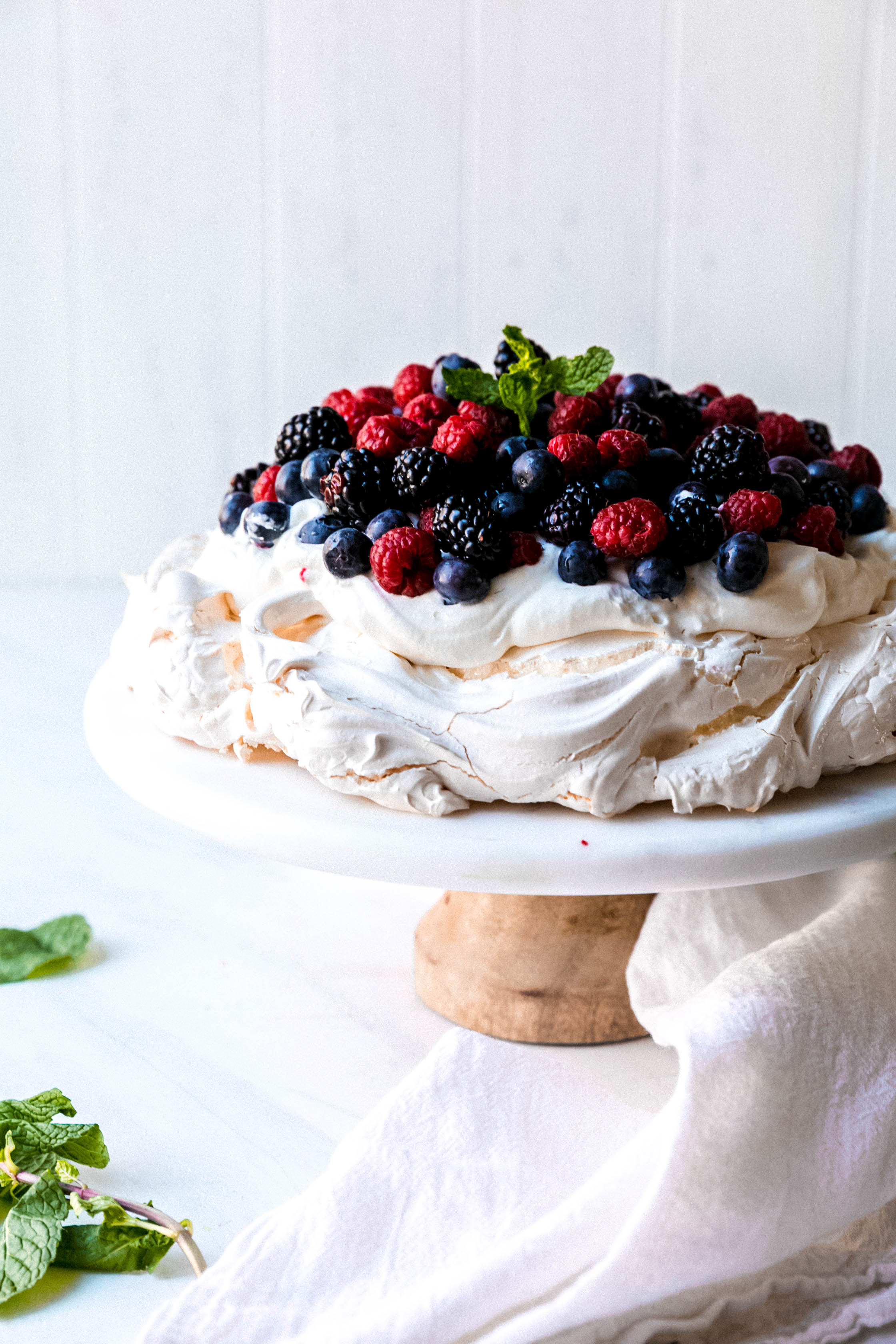
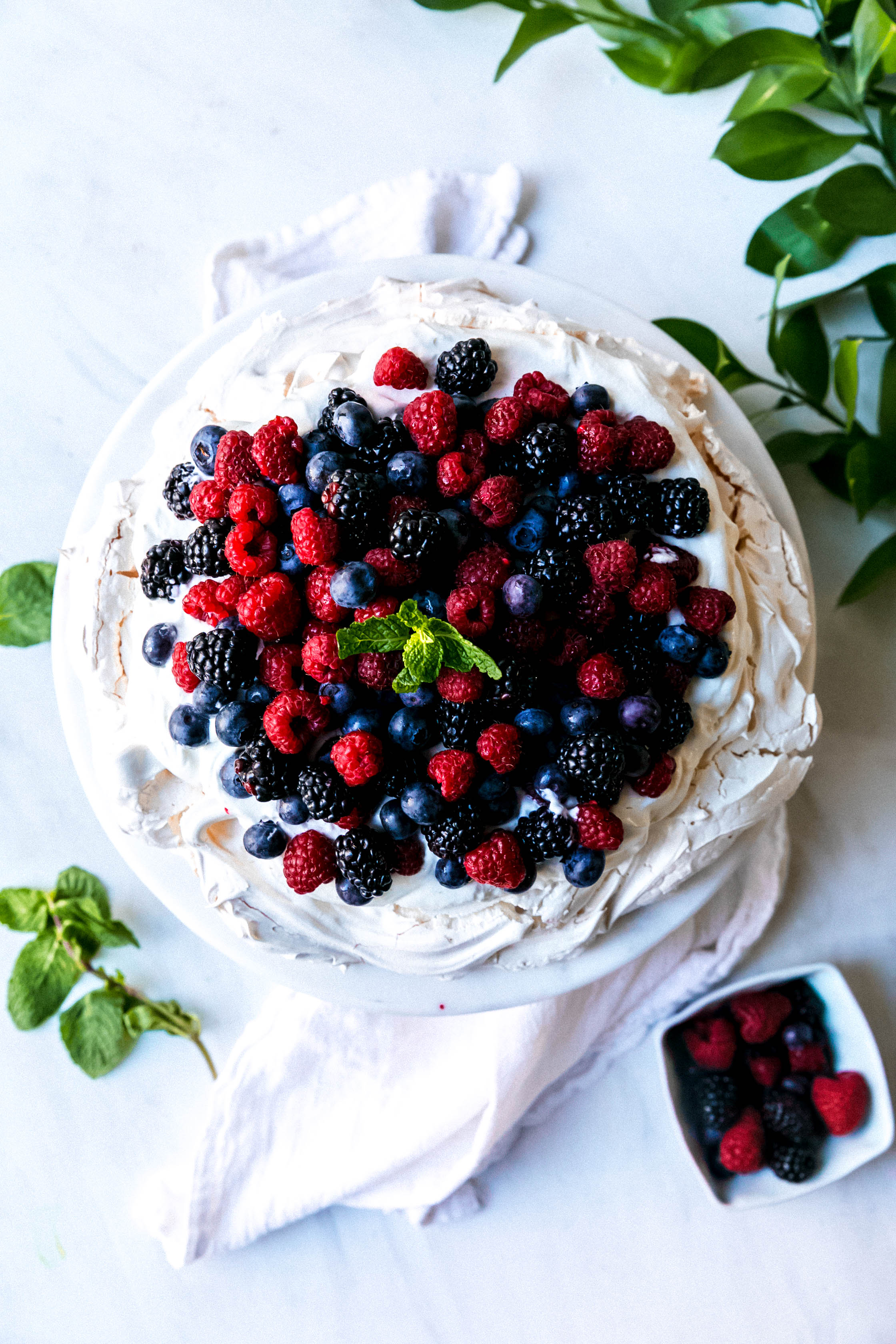 As the story goes, the pavlova was created in Australia to honor the Russian ballerina Anna Pavlova while she was touring the country. I’m not sure if she had the chance to enjoy the dessert created and named for her, but I sure do.
I first had one with my aunt and uncle at a fancy restaurant and I truly never got it out of my head. I used to believe I hated meringues, but that was because I’d only ever had the crisp, dry, and crumbly cookies. I never knew the heights meringue could go.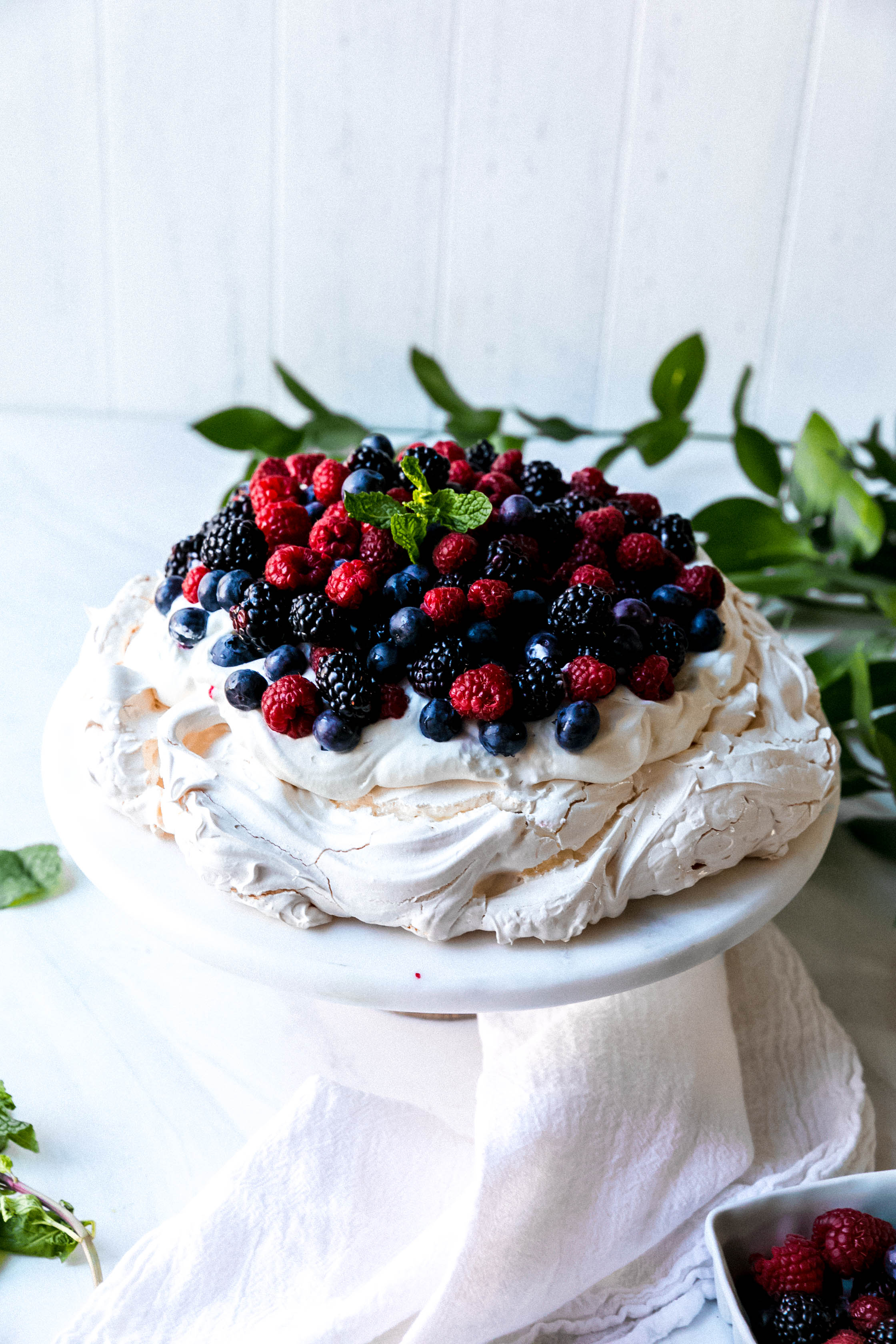
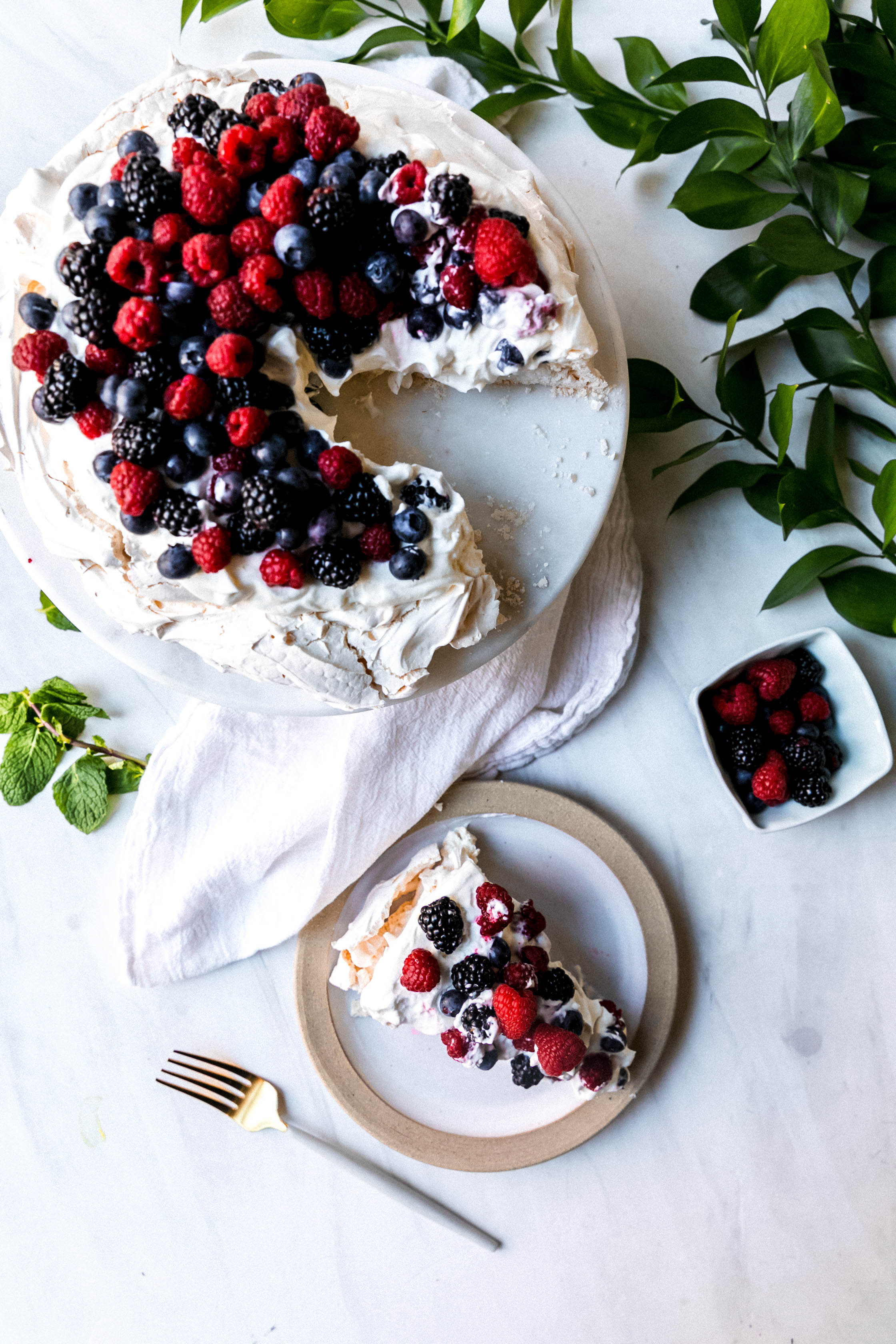 Despite looking extraordinarily fancy, this is actually a relatively simple dessert to make. I made two versions: the first with a classic, uncooked French meringue, which is what most recipes for pavlovas use. It was nothing like the dessert I had cemented in my memory from all those years ago. It was relatively dry and crisp throughout, with no marshmallowy center. Thumbs down.
I did a little research and came upon a (per usual) in-depth and well-tested article from Cook’s Illustrated all about pavlovas. They took a completely different approach by using a Swiss meringue, which essentially guarantees a foolproof, perfect pavlova.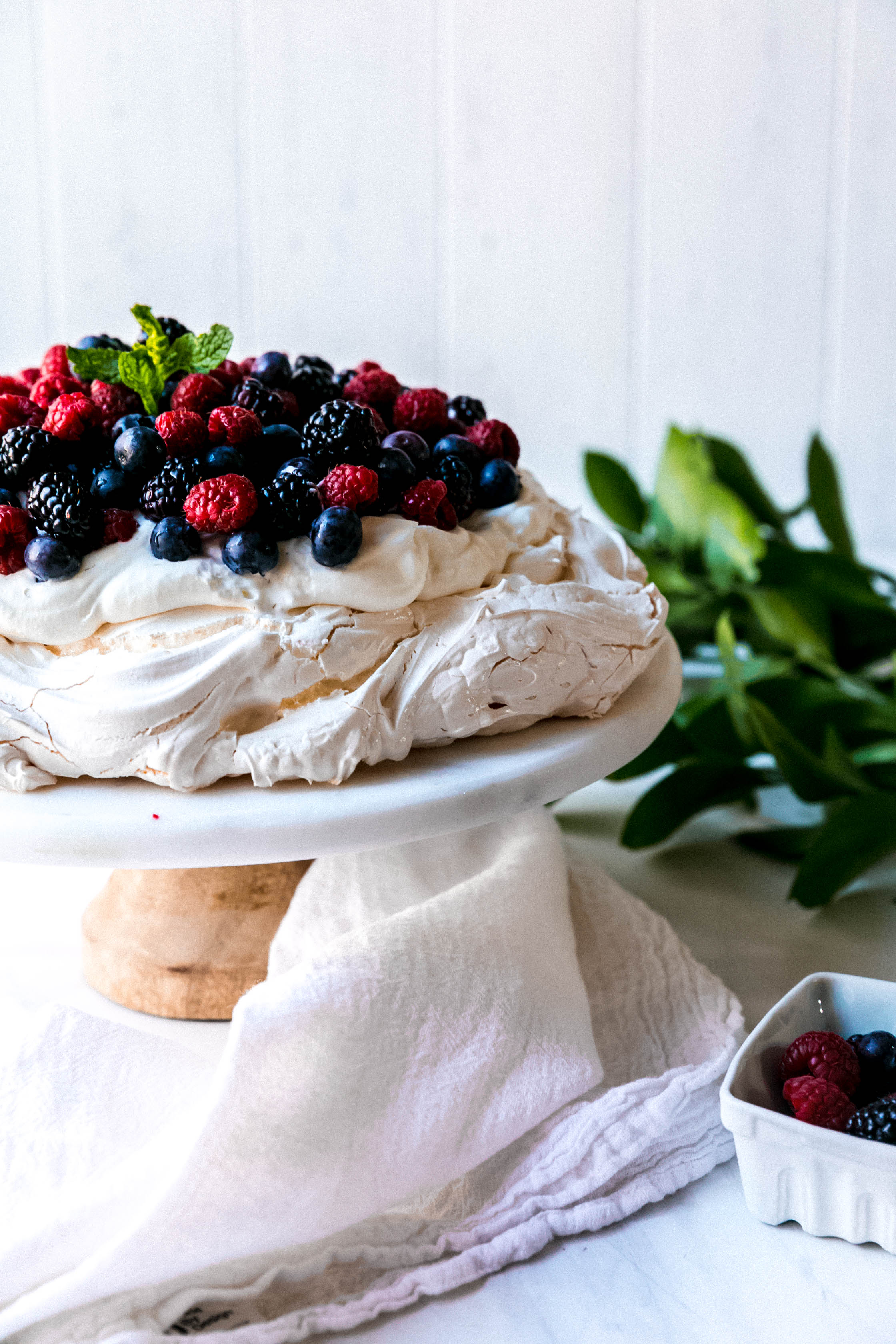
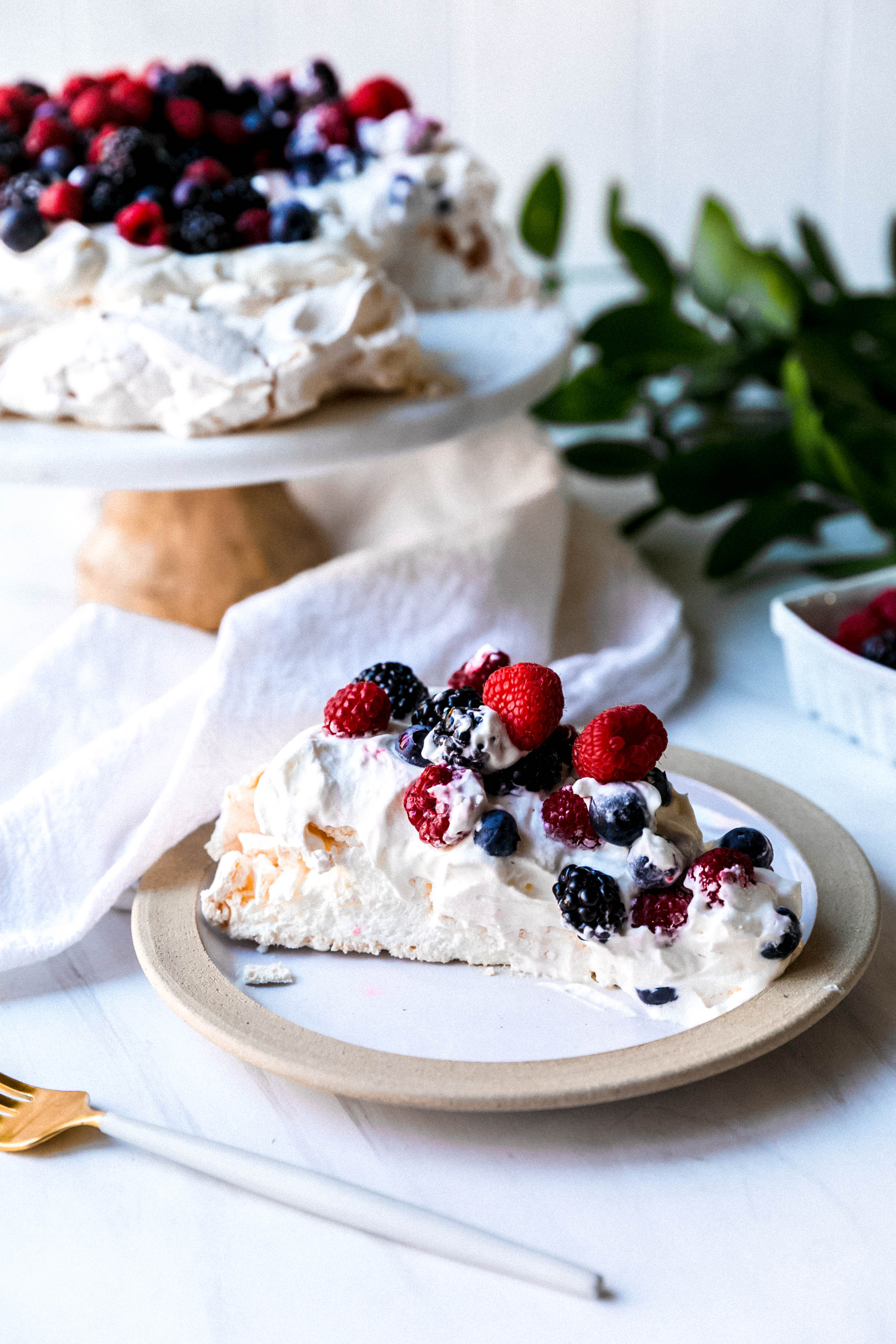 A Swiss meringue is egg whites and sugar set in a double boiler over simmering water, then cooked until the sugar dissolves and the temperature reaches 140°. But this meringue is different-it’s cooked to 160°, which causes more coagulation of the egg proteins and a softer, smoother texture. The egg whites are then whipped (real good) until white, shiny and they hold stiff peaks. Spread into a disk, bake in a low oven, and allow to cool completely in the oven. Transfer to your serving platter, top with a sh*t-ton of whipped cream and an even bigger sh*t-ton of fresh berries. Really, the topping possibilities are endless but 99.9999% of the time include a lot of whipped cream. It’s basically law.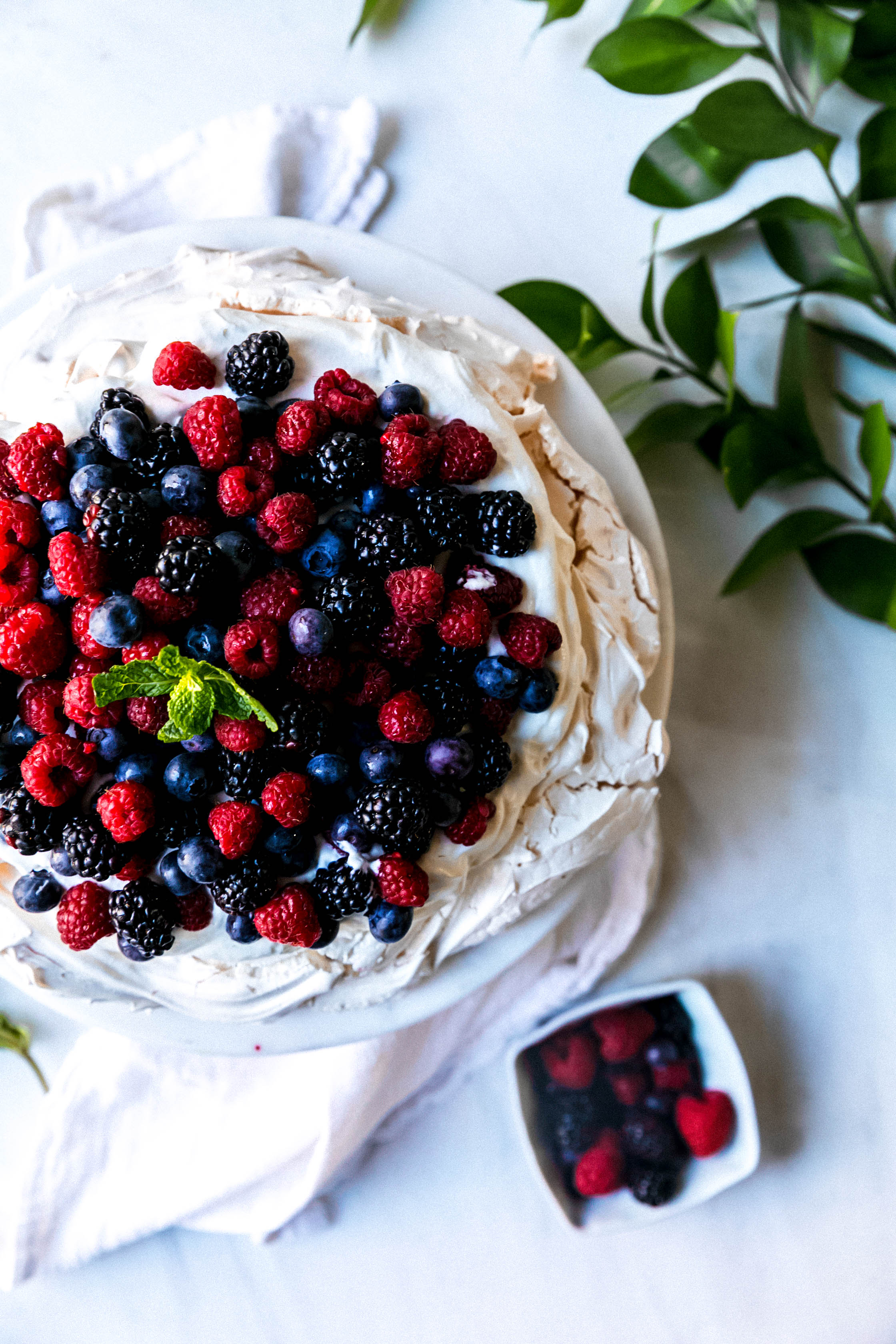
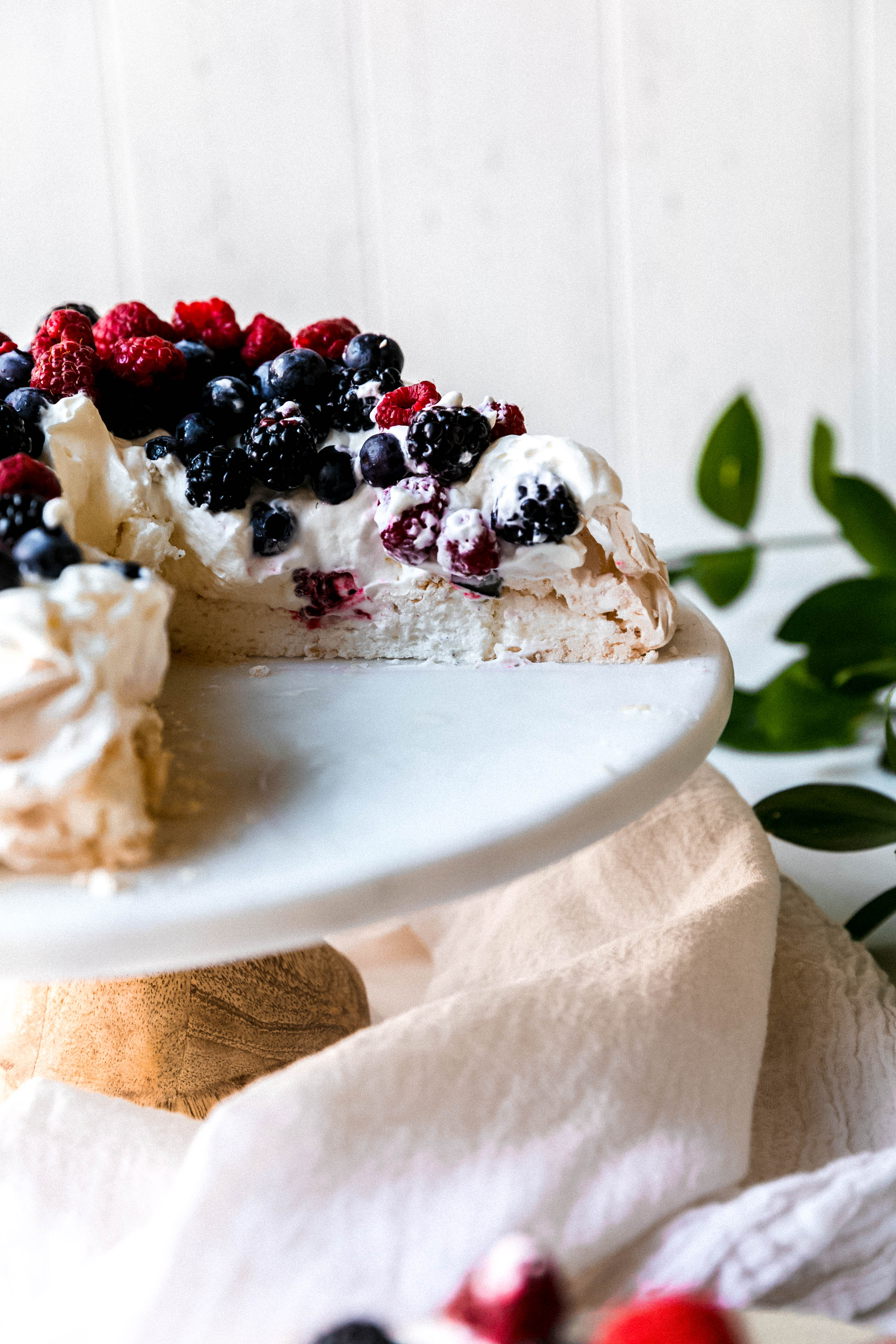 I was so worried about my pavlova cracking, because we’re taught to believe that cracked meringues mean failure. As destiny would have it, I was watching The Great British Baking Show shortly after I made and photographed this. They were, of course, making pavlovas. As the wise Mary Berry said, “Who cares if the pavlova cracks? It adds to the charm.” (or something like that). So here’s my very charming pavlova. Now go make your own!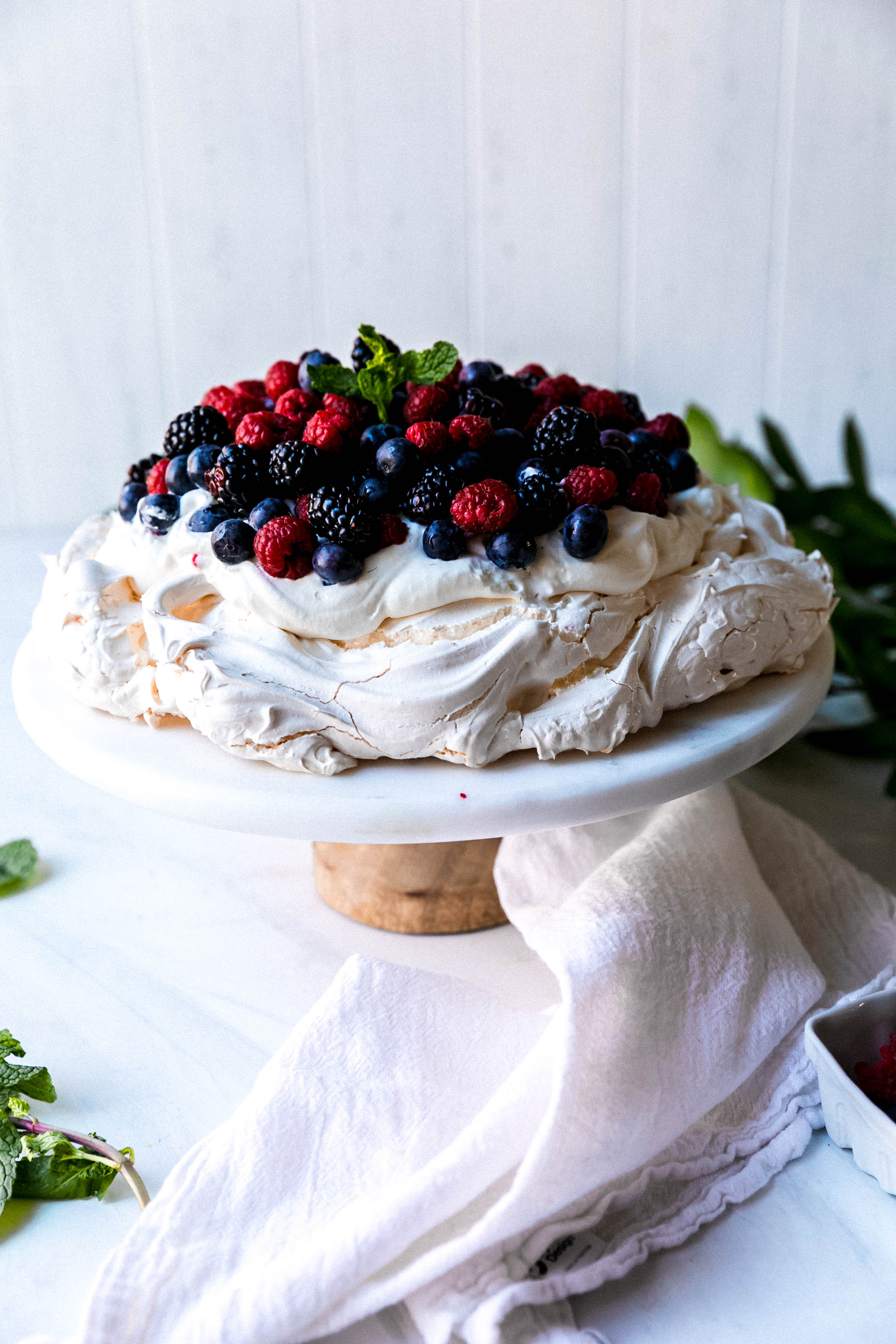
[tasty-recipe id=”37426″]
Leave a Reply